Wednesday, September 19, 2007
Thursday, September 13, 2007
From the Sea to the Children 海에게서 少年에게
From the Sea to the Children
I.
Cho…l sok, cho…l sok, chok, swa…a
Beating, smashing, splashing.
Crests lofty as Mt. Tai, boulders huge as houses,
What is this thing? What is it?
Roaring, “Know you not my great strength?
Beating, smashing, splashing.
Cho…l sok, cho…l sok, chok, tyururung, kwak.
II.
Cho…l sok, cho…l sok, chok, swa…a
There is nothing which frightens me,
Even those who have power or strength in the land,
When they come before me are cowed.
No matter how great the thing, it is impotent before me.
Cho…l sok, cho…l sok, chok, tyururung, kwak.
III
Cho…l sok, cho…l sok, chok, swa…a
Those who have not bowed to me,
If there have been such, come show yourselves!
Qin Xihuang, Napoleon, all of you.
Who, who, whosoever, you, too, will bow before me.
Those who would dispute with me, come forth!
Cho…l sok, cho…l sok, chok, tyururung, kwak.
IV
Cho…l sok, cho…l sok, chok, swa…a
Lie on some small crag,
See I have tiny islands like rice grains, handfuls of earth,
While you are in the heights, I will display my ferocity.
Those who say I am noble,
Come a little closer, look on me!
Cho…l sok, cho…l sok, chok, tyururung, kwak.
V
Cho…l sok, cho…l sok, chok, swa…a
There is one who is my match,
Huge and long and widely o’erspreading, the blue heaven.
It is flawless like me.
There are no petty arguments, insignificant fights, soiled things there.
All such is in the world of men.
Cho…l sok, cho…l sok, chok, tyururung, kwak.
VI
Cho…l sok, cho…l sok, chok, swa…a
That world, those people, are all repulsive,
Among them there is just one thing—the act of loving,
Brave and pure youths,
Sweetly, nobly, come to my bosom and be embraced.
Come O youths and give me a kiss.
Cho…l sok, cho…l sok, chok, tyururung, kwak.
I.
Cho…l sok, cho…l sok, chok, swa…a
Beating, smashing, splashing.
Crests lofty as Mt. Tai, boulders huge as houses,
What is this thing? What is it?
Roaring, “Know you not my great strength?
Beating, smashing, splashing.
Cho…l sok, cho…l sok, chok, tyururung, kwak.
II.
Cho…l sok, cho…l sok, chok, swa…a
There is nothing which frightens me,
Even those who have power or strength in the land,
When they come before me are cowed.
No matter how great the thing, it is impotent before me.
Cho…l sok, cho…l sok, chok, tyururung, kwak.
III
Cho…l sok, cho…l sok, chok, swa…a
Those who have not bowed to me,
If there have been such, come show yourselves!
Qin Xihuang, Napoleon, all of you.
Who, who, whosoever, you, too, will bow before me.
Those who would dispute with me, come forth!
Cho…l sok, cho…l sok, chok, tyururung, kwak.
IV
Cho…l sok, cho…l sok, chok, swa…a
Lie on some small crag,
See I have tiny islands like rice grains, handfuls of earth,
While you are in the heights, I will display my ferocity.
Those who say I am noble,
Come a little closer, look on me!
Cho…l sok, cho…l sok, chok, tyururung, kwak.
V
Cho…l sok, cho…l sok, chok, swa…a
There is one who is my match,
Huge and long and widely o’erspreading, the blue heaven.
It is flawless like me.
There are no petty arguments, insignificant fights, soiled things there.
All such is in the world of men.
Cho…l sok, cho…l sok, chok, tyururung, kwak.
VI
Cho…l sok, cho…l sok, chok, swa…a
That world, those people, are all repulsive,
Among them there is just one thing—the act of loving,
Brave and pure youths,
Sweetly, nobly, come to my bosom and be embraced.
Come O youths and give me a kiss.
Cho…l sok, cho…l sok, chok, tyururung, kwak.
Yukdang Ch'oe Nam-sön 1890~1957
海에게서 少年에게
1
처……ㄹ썩, 처……ㄹ썩, 척, 쏴……아.
때린다 부순다 무너 버린다.
태산 같은 높은 뫼, 집채 같은 바윗돌이나,
요것이 무어야, 요게 무어야.
나의 큰 힘 아느냐 모르느냐, 호통까지 하면서,
때린다 부순다 무너 버린다.
처……ㄹ썩, 처……ㄹ썩, 척, 튜르릉, 꽉.
2
처……ㄹ썩, 처……ㄹ썩, 척, 쏴……아.
내게는 아무 것 두려움 없어,
陸上에서, 아무런 힘과 權을 부리던 자라도,
내 앞에 와서는 꼼짝 못하고,
아무리 큰 물건도 내게는 행세하지 못하네.
내게는 내게는 나의 앞에는
처……ㄹ썩, 처……ㄹ썩, 척, 튜르릉, 꽉.
3
처……ㄹ썩, 처……ㄹ썩, 척, 쏴……아.
나에게 절하지 아니한 자가,
지금까지 있거든 通寄하고 나서 보아라.
秦始皇, 나파륜*, 너희들이냐.
누구 누구 누구냐 너희 역시 내게는 굽히도다.
나하고 겨룰 이 있건 오너라.
처……ㄹ썩, 처……ㄹ썩, 척, 튜르릉, 꽉.
4
처……ㄹ썩, 처……ㄹ썩, 척, 쏴……아.
조그만 산모를 의지하거나,
좁쌀 같은 작은 섬, 손뼉만한 땅을 가지고,
고 속에 있어서 영악한 체를,
부리면서, 나 혼자 거룩하다 하는 자,
이리 좀 오너라, 나를 보아라.
처……ㄹ썩, 처……ㄹ썩, 척, 튜르릉, 꽉.
5
처……ㄹ썩, 처……ㄹ썩, 척, 쏴……아.
나의 짝 될 이는 하나 있도다.
크고 길고 넓게 뒤덮은 바 저 푸른 하늘.
저것은 우리와 틀림이 없어,
작은 시비, 작은 쌈, 온갖 모든 더러운 것 없도다.
조따위 세상에 조 사람처럼.
처……ㄹ썩, 처……ㄹ썩, 척, 튜르릉, 꽉.
6
처……ㄹ썩, 처……ㄹ썩, 척, 쏴……아.
저 세상 저 사람 모두 미우나,
그 중에서 똑 하나 사랑하는 일이 있으니,
담 크고 순진한 少年輩들이,
재롱처럼 귀엽게 나의 품에 와서 안김이로다.
오너라 소년배 입 맞춰 주마.
처……ㄹ썩, 처……ㄹ썩, 척, 튜르릉, 꽉.
1
처……ㄹ썩, 처……ㄹ썩, 척, 쏴……아.
때린다 부순다 무너 버린다.
태산 같은 높은 뫼, 집채 같은 바윗돌이나,
요것이 무어야, 요게 무어야.
나의 큰 힘 아느냐 모르느냐, 호통까지 하면서,
때린다 부순다 무너 버린다.
처……ㄹ썩, 처……ㄹ썩, 척, 튜르릉, 꽉.
2
처……ㄹ썩, 처……ㄹ썩, 척, 쏴……아.
내게는 아무 것 두려움 없어,
陸上에서, 아무런 힘과 權을 부리던 자라도,
내 앞에 와서는 꼼짝 못하고,
아무리 큰 물건도 내게는 행세하지 못하네.
내게는 내게는 나의 앞에는
처……ㄹ썩, 처……ㄹ썩, 척, 튜르릉, 꽉.
3
처……ㄹ썩, 처……ㄹ썩, 척, 쏴……아.
나에게 절하지 아니한 자가,
지금까지 있거든 通寄하고 나서 보아라.
秦始皇, 나파륜*, 너희들이냐.
누구 누구 누구냐 너희 역시 내게는 굽히도다.
나하고 겨룰 이 있건 오너라.
처……ㄹ썩, 처……ㄹ썩, 척, 튜르릉, 꽉.
4
처……ㄹ썩, 처……ㄹ썩, 척, 쏴……아.
조그만 산모를 의지하거나,
좁쌀 같은 작은 섬, 손뼉만한 땅을 가지고,
고 속에 있어서 영악한 체를,
부리면서, 나 혼자 거룩하다 하는 자,
이리 좀 오너라, 나를 보아라.
처……ㄹ썩, 처……ㄹ썩, 척, 튜르릉, 꽉.
5
처……ㄹ썩, 처……ㄹ썩, 척, 쏴……아.
나의 짝 될 이는 하나 있도다.
크고 길고 넓게 뒤덮은 바 저 푸른 하늘.
저것은 우리와 틀림이 없어,
작은 시비, 작은 쌈, 온갖 모든 더러운 것 없도다.
조따위 세상에 조 사람처럼.
처……ㄹ썩, 처……ㄹ썩, 척, 튜르릉, 꽉.
6
처……ㄹ썩, 처……ㄹ썩, 척, 쏴……아.
저 세상 저 사람 모두 미우나,
그 중에서 똑 하나 사랑하는 일이 있으니,
담 크고 순진한 少年輩들이,
재롱처럼 귀엽게 나의 품에 와서 안김이로다.
오너라 소년배 입 맞춰 주마.
처……ㄹ썩, 처……ㄹ썩, 척, 튜르릉, 꽉.
육당 최남선 六堂 崔南善
Labels:
Ch'oe Nam-sön,
From the Sea to the Children,
崔南善,
海에게서 少年에게,
六堂
Tuesday, September 11, 2007
The Pulse of Korea
Korea’s Pulse 朝鮮의 脈搏
One night when like the ashes of a dead fire
My passion closed my two eyes and while I was still,
I tried to feel Korea’s feeble pulse,
I am your capillaries, its pulse.
After awhile it was dawn --under the brightening eastern sky
While hope and courage raised my two hands,
I heard Korea’s childrens’ sighs,
I am your trachea, its breaths.
But, look! On such a morning, along the road
Robust youngsters, young students, their
Ball-throwing swift hands, the two strong arms of the
women students hugging their books
Their radiant faces, vigorous gaits—
Ah ah is this not the pulse of Korea, indeed?
The vigorously growing infant’s two rosy cheeks,
Their resounding cries as they search for the pap,
Though tiny, their vigorous hands grasping,
Their grinning, laughing lips, bright eyes overflowing with joy—
Ah ah, Korea’s aorta, Korea’s lungs, you babes, it is only for you …
One night when like the ashes of a dead fire
My passion closed my two eyes and while I was still,
I tried to feel Korea’s feeble pulse,
I am your capillaries, its pulse.
After awhile it was dawn --under the brightening eastern sky
While hope and courage raised my two hands,
I heard Korea’s childrens’ sighs,
I am your trachea, its breaths.
But, look! On such a morning, along the road
Robust youngsters, young students, their
Ball-throwing swift hands, the two strong arms of the
women students hugging their books
Their radiant faces, vigorous gaits—
Ah ah is this not the pulse of Korea, indeed?
The vigorously growing infant’s two rosy cheeks,
Their resounding cries as they search for the pap,
Though tiny, their vigorous hands grasping,
Their grinning, laughing lips, bright eyes overflowing with joy—
Ah ah, Korea’s aorta, Korea’s lungs, you babes, it is only for you …
Muae Yang Chu-dong 1903~1977
朝鮮의 脈搏
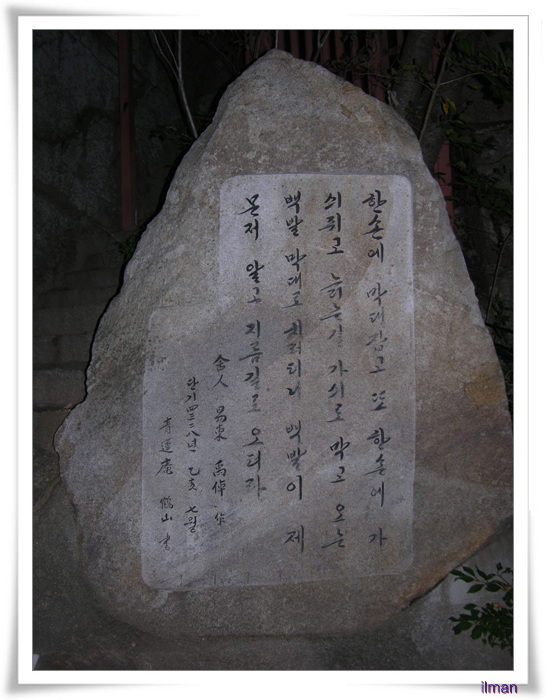
한밤에 불 꺼진 재와 같이
나의 정열이 두 눈을 감고 잠잠할 때에,
나는 조선의 힘 없는 맥박을 짚어 보노라.
나는 임의 毛細管, 그의 맥박이로다.
이윽고 새벽이 되어 환한 동녘 하늘 밑에서
나의 희망과 용기가 두 팔을 뽐낼 때면,
나는 조선의 소생된 긴 한숨을 듣노라.
나는 임의 기관氣管이요, 그의 숨결이로다.
그러나 보라, 이른 아침 길가에 오가는
튼튼한 젊은이들, 어린 학생들, 그들의
공 던지는 날랜 손발,
책보 낀 여생도의 힘있는 두 팔
그들의 빛나는 얼굴, 활기 있는 걸음걸이
아아, 이야말로 참으로 조선의 산 맥박이 아닌가.
무럭무럭 자라나는 갓난 아이의 귀여운 두 볼.
젖 달라 외치는 그들의 우렁찬 울음.
작으나마 힘찬, 무엇을 잡으려는 그들의 손아귀.
해죽해죽 웃는 입술, 기쁨에 넘치는 또렷한 눈동자.
아아, 조선의 대동맥, 조선의 肺는 아가야 너에게만
있도다.
있도다.
무애 양주동 无涯 梁柱東
Labels:
Korea's Pulse,
Korean poetry,
Muae,
translation,
Yang Chu-dong,
Yang Ju-dong,
无涯,
양주동,
조선의맥박
Monday, September 10, 2007
Cricket
Cricket
Howl of the mountain wind.
Drumming of the chilly rain.
At night when you talk
of the sorrows and joys of life,
The wine stall fire dies and
the cricket weeps.
Howl of the mountain wind.
Drumming of the chilly rain.
At night when you talk
of the sorrows and joys of life,
The wine stall fire dies and
the cricket weeps.
Sowöl Kim Chöng-sik 1902~1934
귀뚜라미
산(山)바람 소리.
찬비 뜯는 소리.
그대가 世上 苦樂 말하는 날 밤에,
순막집 불도 지고 귀뚜라미 울어라.
산(山)바람 소리.
찬비 뜯는 소리.
그대가 世上 苦樂 말하는 날 밤에,
순막집 불도 지고 귀뚜라미 울어라.
소월 김정식 素月 金廷湜
Labels:
Cricket,
Kim Chŏng-sik,
Kim So-wŏl,
Korean poetry,
So-wŏl,
translation,
金廷湜,
金素月,
귀뚜라미,
김소월
Friday, September 7, 2007
In the Wind 바람 속에서
In the Wind
The wind
A rag-tag torn
Banner
From bleak mountain tops
From high in the sky
Tragically flapping
Screeching
Now
With those ragged skirts
Sweeping the ground
To rise up against
My slanted night
Howls
Passing outside the window
That laughing skirt
Turned soiled blanket
Laid
Coldly
O'er
My breast
Ilmo Chöng Han-mo 1923~1991
바람 속에서
바람은
발기발기 찢어진
기폭
어두운 산정에서
하늘 높은 곳에서
비장하게 휘날리다가
절규하다가
지금은
그 남루한 자락으로
땅을 쓸며
경사진 나의 밤을
거슬러 오른다
소리는
창밖을 지나가는데
그 허허한 자락은
때묻은 이불이 되어
내 가슴
위에
싸늘히
얹힌다
발기발기 찢어진
기폭
어두운 산정에서
하늘 높은 곳에서
비장하게 휘날리다가
절규하다가
지금은
그 남루한 자락으로
땅을 쓸며
경사진 나의 밤을
거슬러 오른다
소리는
창밖을 지나가는데
그 허허한 자락은
때묻은 이불이 되어
내 가슴
위에
싸늘히
얹힌다
일모 정한모 一茅 鄭漢模
Labels:
Chöng Han-mo,
Ilmo,
In the Wind,
Korean poetry,
translation,
一茅,
鄭漢模,
일모,
정한모
Demo 데모
Demo
-- A Song Dedicated to the Hamhüng Student Incident
(March 13, 1946)
I want to plunge in
I want to plunge in
Splash! into the river's torrents
With the roar of the rapids
Streaming along with the shouts of 'viva!'
Among the crowds of heroes
The battle cries, the ocean's roar
I want to break like ocean's roar o'er the shore
I want to die! I want to die!
The leper stands crying and the demo goes by.
Ah, the leper wants to die!
Ha-un Han T'ae-yöng 1920~1975
데모
--함흥 학생사건에 바치는 노래 (1946. 3. 13)--
뛰어들고 싶어라
뛰어들고 싶어라.
풍덩실 저 강물 속으로
물구비 파도 소리와 함께
만세 소리와 함께 흐르고 싶어라.
모두들 성한 사람들 저이끼리만
아우성 소리 바다 소리.
아 바다 소리와 함께 부서지고 싶어라
죽고 싶어라 죽고 싶어라
문둥이는 서서 울고 데모는 가고.
아 문둥이는 죽고 싶어라.
뛰어들고 싶어라
뛰어들고 싶어라.
풍덩실 저 강물 속으로
물구비 파도 소리와 함께
만세 소리와 함께 흐르고 싶어라.
모두들 성한 사람들 저이끼리만
아우성 소리 바다 소리.
아 바다 소리와 함께 부서지고 싶어라
죽고 싶어라 죽고 싶어라
문둥이는 서서 울고 데모는 가고.
아 문둥이는 죽고 싶어라.
하운 한태영 河雲 韓泰永
Labels:
Demo,
Han Ha-un,
Korean poetry,
translation,
韓河雲,
韓泰永,
한태영,
한하운
Thursday, September 6, 2007
Azaleas
Azaleas
When you go
sick of the sight of me
I’ll send you off quietly without a word
On Yaksan in Yŏngbyŏn
the azaleas
I’ll pick armfuls and strew them on your path
Your parting steps
please walk gently
on these blossoms
When you go
sick of the sight of me
my tears won’t fall though I die
So-wŏl Kim Chŏng-sik 1902~1934
진달래꽃
나 보기가 역겨워
가실 때에는
말없이 고이 보내 드리오리다
寧邊에 藥山
진달래꽃
아름 따다 가실 길에 뿌리오리다
가시는 걸음걸음
놓인 그 꽃을
사뿐히 즈려밝고 가시옵소서
나 보기가 역겨워
가실 때에는 죽어도 아니 눈물 흘리오리다
가실 때에는
말없이 고이 보내 드리오리다
寧邊에 藥山
진달래꽃
아름 따다 가실 길에 뿌리오리다
가시는 걸음걸음
놓인 그 꽃을
사뿐히 즈려밝고 가시옵소서
나 보기가 역겨워
가실 때에는 죽어도 아니 눈물 흘리오리다
소월 김정식 素月 金廷湜
Labels:
Kim Chŏng-sik,
Kim So-wŏl,
Korean poetry,
So-wŏl,
translation,
素月,
金廷湜,
金素月,
김소월,
김정식,
소월
Memory
Memory
Thinking to forget,
Thinking to forget,
days walking the skirt of the sea
one day
two days
three days
Summers went
Autumns went
Winters on this beach when the groups of shell-gathering woman divers disappeared
Thinking to forget,
days walking the skirt of the sea
one day
two days
three days
P'yön-un Cho Pyöng-hwa 1921~2003
추억
잊어버리자고
바다 기슭을 걸어 보던 날이
하루
이틀
사흘
잊어버리자고
바다 기슭을 걸어 보던 날이
하루
이틀
사흘
여름 가고
가을 가고
조개 줍는 해녀의 무리 사라진 겨울 이 바다에
잊어버리자고
바다 기슭을 걸어가는 날이
하루
이틀
사흘
이틀
사흘
편운 조병화 片雲 趙炳華
Labels:
Cho Pyöng-hwa,
Korean poetry,
P'yön-un,
translation,
片雲,
趙炳華,
조병화,
편운
Wednesday, September 5, 2007
A Summer Morning When the Rain Cleared Up
One day when the rain cleared up
the clear sky came down into a pond
and made a summer's morning:
the green shade turned into paper
and a goldfish wrote a poem
Isan Kim Kwang-söp 1905~1977
비 개인 여름 아침
비가 개인 날,
맑은 하늘이 못 속에 내려와서
여름 아침을 이루었으니
綠陰이 종이가 되어
금붕어가 시를 쓴다.
비가 개인 날,
맑은 하늘이 못 속에 내려와서
여름 아침을 이루었으니
綠陰이 종이가 되어
금붕어가 시를 쓴다.
The Ferry and the Traveler
The Ferry and Traveler
I am the ferry
You are the traveler
You tread on me with mud feet
I embrace you and cross the waters
I embrace you and cross the deep, shallow, and
raging torrents
If you do not come, I will face the winds and bear the
snow and rain waiting for you from night ‘til morn
If you cross the waters, you won’t even glance back
at me and go,
But I know that you will come some day
While I wait for you, every day, every day, I grow
older
I am the ferry
You are the traveler
I am the ferry
You are the traveler
You tread on me with mud feet
I embrace you and cross the waters
I embrace you and cross the deep, shallow, and
raging torrents
If you do not come, I will face the winds and bear the
snow and rain waiting for you from night ‘til morn
If you cross the waters, you won’t even glance back
at me and go,
But I know that you will come some day
While I wait for you, every day, every day, I grow
older
I am the ferry
You are the traveler
Manhae Han Yong-un 1879~1944
나릇배 와 行人
나는 나룻배
당신은 행인
당신은 흙발로 나를 짓 밟습니다.
나는 당신을 안고 물을 건너갑니다.
나는 당신을 안으며 깊으나 옅으나 급한 여울이나 건너갑니다.
만일 당신이 아니 오시면 나는 바람을 쐬고 눈비를 맞으며
밤에서 낮까지 당신을 기다리고 있습니다.
당신은 물만 건너면 나를 돌아보지도 않고 가십니다그려,
그러나 당신이 언제든지 오실 줄만은 알아요
나는 당신을 기다리면서 날마다 날마다 낡아갑니다.
나는 나릇배
당신은 행인.
나는 나룻배
당신은 행인
당신은 흙발로 나를 짓 밟습니다.
나는 당신을 안고 물을 건너갑니다.
나는 당신을 안으며 깊으나 옅으나 급한 여울이나 건너갑니다.
만일 당신이 아니 오시면 나는 바람을 쐬고 눈비를 맞으며
밤에서 낮까지 당신을 기다리고 있습니다.
당신은 물만 건너면 나를 돌아보지도 않고 가십니다그려,
그러나 당신이 언제든지 오실 줄만은 알아요
나는 당신을 기다리면서 날마다 날마다 낡아갑니다.
나는 나릇배
당신은 행인.
만해 한용운 萬海 韓龍雲
Labels:
Ferry and Traveler,
Han Yong-un,
Korean poetry,
Manhae,
translation,
나릇배 와 행인,
만해,
한용운
Tuesday, September 4, 2007
An Old Postcard 옛엽서
An Old Postcard
All through the day rain fell.
Toward the harbor where ferryboats came and went
the southbound train galloped on without a breather.
On the narrow third class car window
rain was streaming and streaming;
Like the poem about the child floating in the aquarium
sprouting barely fields could be seen;
poplars could be seen, old mountain ranges could be seen.
In the compartment where even the sounds of voices had fallen asleep
I
awoke once heading for some shore in Central Asia and
tried to close my sleepless eyes.
All through the day rain fell.
Toward the harbor where ferryboats came and went
the southbound train galloped on without a breather.
On the narrow third class car window
rain was streaming and streaming;
Like the poem about the child floating in the aquarium
sprouting barely fields could be seen;
poplars could be seen, old mountain ranges could be seen.
In the compartment where even the sounds of voices had fallen asleep
I
awoke once heading for some shore in Central Asia and
tried to close my sleepless eyes.
P'yön-un Cho Pyöng-hwa 1921~2003
옛 엽서
온종일 비가 내렸습니다.
연락선이 왔다 간다는 항구로
남행 열차는 쉴새 없이 달렸습니다.
삼등실 좁은 차창에
빗물이 흐르고 흐르고
수족관에 뜬 어린 시(詩)같이
싹튼 보리밭이 보이고
포플라가 보이고 늙은 산맥이 보였습니다
말소리도 잠들어 버린 차칸에
나는
중앙 아시아 어느 바다로 가는 것일 게니 하고
졸음 없는 눈을 감아 보았습니다
온종일 비가 내렸습니다.
연락선이 왔다 간다는 항구로
남행 열차는 쉴새 없이 달렸습니다.
삼등실 좁은 차창에
빗물이 흐르고 흐르고
수족관에 뜬 어린 시(詩)같이
싹튼 보리밭이 보이고
포플라가 보이고 늙은 산맥이 보였습니다
말소리도 잠들어 버린 차칸에
나는
중앙 아시아 어느 바다로 가는 것일 게니 하고
졸음 없는 눈을 감아 보았습니다
편운 조병화 片雲 趙炳華
Labels:
Cho Pyöng-hwa,
Korean poetry,
translation,
趙炳華,
조병화
Thursday, August 30, 2007
Conch 소라
Conch
On the seashore
a conch
so all alone.
In vain hope
as it grows so terribly alone
longs for the deeps.
As sun and moon pass by
even the conch's dreams
go hard beside the sea's waters.
On the skirt of great sea
all through the day
the conch
so all alone.
P'yön-un Cho Pyöng-hwa 1921~2003
소라
바다엔
소라
저만이 외롭답니다.
허무한 희망에
몹시도 쓸쓸해지면
소라는 슬며시
물 속이 그립답니다.
해와 달이 지나갈수록
소라의 꿈도
바닷물에 굳어 간답니다.
큰 바다 기슭엔
온종일
소라
저만이 외롭답니다.
Labels:
Cho Pyöng-hwa,
Conch,
Korean poetry,
Sora,
translation,
번역,
소라,
조병화,
현대시
Symbols of Ink
Labels:
Kim Kwang-sop,
Korean poetry,
poem,
Symbols of Ink,
translations,
象徵의墨,
金珖燮,
김광섭
Wednesday, August 29, 2007
Separation is Beauty's Creation
Separation is beauty's creation.
Separation's beauty is in the intangible yellow-gold of
morning and the textureless black silk of evening
and eternal life's deathlessness and even in the
unwithering sky's blue blossoms lacking.
You. If it were not for separation, I would be
unable to die in tears and live again in laughter.
Oh, oh! Separation.
Beauty is separation's creation.
Manhae Han Yong-un 1879~1944
이별은 美의 創造
이별은 美의 創造입니다.
이별의 美는 아침의 바탕 없는 황금과 밤의 올 없는 검은
비단과 죽음 없는 永遠의 生命과 시들지 않는 하늘의 푸른 꽃에도
없습니다.
님이여, 이별이 아니면 나는 눈물에서 죽었다가 웃음에서 다시
살아날 수가 없습니다. 오오, 이별이여.
美는 이별의 創造입니다.
이별은 美의 創造입니다.
이별의 美는 아침의 바탕 없는 황금과 밤의 올 없는 검은
비단과 죽음 없는 永遠의 生命과 시들지 않는 하늘의 푸른 꽃에도
없습니다.
님이여, 이별이 아니면 나는 눈물에서 죽었다가 웃음에서 다시
살아날 수가 없습니다. 오오, 이별이여.
美는 이별의 創造입니다.
만해 한룡운 萬海 韓龍雲
Labels:
Han Yong-un,
Korean poetry,
Separation is beauty's creation,
萬海,
韓龍雲,
만해,
이별은 美의 創造,
한룡운
Longing 憧憬
Longing
All fine words
Become mute orphans
Become dreams, become grief
Something calls me
Trailing after the wind
Night when even the stars fell
In darkness like an oppressive dream
One distinct image
Looms among the myriads
Isan Kim Kwang-söp 1905~1977
憧憬
온갖 詞華들이
無言의 孤兒가 되어
꿈이 되고 슬픔이 되다.
무엇이 나를 불러서
바람에 따라가는 길
별조차 떨어진 밤
무거운 꿈 같은 어둠 속에
하나의 뚜렷한 形象이
나의 萬象에 깃들이다.
온갖 詞華들이
無言의 孤兒가 되어
꿈이 되고 슬픔이 되다.
무엇이 나를 불러서
바람에 따라가는 길
별조차 떨어진 밤
무거운 꿈 같은 어둠 속에
하나의 뚜렷한 形象이
나의 萬象에 깃들이다.
이산 김광섭 怡山 金珖燮
Labels:
Gim Gwang-seop,
Kim Kwang-söp,
Korean poetry,
Longing,
憧憬,
金珖燮,
김광섭,
동경,
현대시
Tuesday, August 28, 2007
It Can't Be Known 알수 없어요
It Can’t Be Known
Sending forth ripples of perpendiculars in the breathless air,
The silently falling paulownia leaf, whose face is it?
Sending forth ripples of perpendiculars in the breathless air,
The silently falling paulownia leaf, whose face is it?
The blue sky suddenly glimpsed through a rent torn in the dark clouds driven by the West Wind at the end of the tedious monsoon,
Whose face is it?
Passing by the green moss in the flowerless deep wood, brushing the silent sky above an ancient pagoda,
Whose breath is it?
Rising from some unknowable source, ringing the heart of the rock,
The thinly flowing tiny rivulet twistiing, turning, whose song is it?
Treading the boundles seas with flower-like feet, while stroking the endless skies with jade-like hands,
The evening glow gloriously adorned in the setting sun, whose poem is it?
Burnt out ashes turn again to tallow.
My burning breast, knowing not how to stop, is a dim lamp keeping watch over whose night?
Manhae Han Yong-un 1879~1944
알수없어요
바람도 없는 공중에 垂直의 파문을 내이며
고요히 떨어지는 오동잎은 누구의 발자취입니까?
지리한 장마 끝에 서풍에 몰려가는 검은 구름의 터진 틈으로
언뜻언뜻 보이는 푸른 하늘은 누구의 얼굴입니까?
꽃도 없는 깊은 나무에 푸른 이끼를 거쳐서 옛 塔 위의 고요한 하늘을
스치는 알 수 없는 향기는 누구의 입김입니까?
근원은 알지도 못할 곳에서 나서 돌뿌리를 울리고
가늘게 흐르는 작은 시내는 구비구비 누구의 노래입니까?
연꽃 같은 발꿈치로 가이 없는 바다를 밟고 옥 같은 손으로 끝없는 하늘을 만지면서
떨어지는 해를 곱게 단장하는 저녁놀은 누구의 詩입니까?
타고 남은 재가 다시 기름이 됩니다.
그칠 줄을 모르고 타는 나의 가슴은 누구의 밤을 지키는 약한 등불입니까?
바람도 없는 공중에 垂直의 파문을 내이며
고요히 떨어지는 오동잎은 누구의 발자취입니까?
지리한 장마 끝에 서풍에 몰려가는 검은 구름의 터진 틈으로
언뜻언뜻 보이는 푸른 하늘은 누구의 얼굴입니까?
꽃도 없는 깊은 나무에 푸른 이끼를 거쳐서 옛 塔 위의 고요한 하늘을
스치는 알 수 없는 향기는 누구의 입김입니까?
근원은 알지도 못할 곳에서 나서 돌뿌리를 울리고
가늘게 흐르는 작은 시내는 구비구비 누구의 노래입니까?
연꽃 같은 발꿈치로 가이 없는 바다를 밟고 옥 같은 손으로 끝없는 하늘을 만지면서
떨어지는 해를 곱게 단장하는 저녁놀은 누구의 詩입니까?
타고 남은 재가 다시 기름이 됩니다.
그칠 줄을 모르고 타는 나의 가슴은 누구의 밤을 지키는 약한 등불입니까?
만해 한용운 萬海 韓龍雲
Labels:
Han Yong-un,
It Can't Be Known,
Korean poetry,
translation,
韓龍雲,
알수없어요,
한용운
Two People
Two People
When white snow, one flake and then another
Covers the rim of the ridge
I wind leg warmers around my straw sandals
Pull my cloak tight about me and
While I draw myself up tall
Though I turn on my heels to go . . . . . . . . .
I look back again and again
So-wöl Kim Chöng-sik 1902~1934
두 사람
흰눈은 한잎 또 한잎
嶺기슭을 덮을때
짚신에 감발하고 길심매고
우뚝 일어나면서 돌아서도 . . . . . . . . .
다시금 또 보이는
다시금 또 보이는
素月 金廷湜
Labels:
Gim Jeong-sik,
Gim So-weol,
Kim So-weol,
Korean poetry,
translation,
Two People,
김소월,
김정식,
두사람,
현대시
Subscribe to:
Posts (Atom)